
Everyone knows tea, and tried it atleast once in their life. But there are many misconceptions about tea. Firstly, tea doesn’t grow as a shrub naturally in neat rows it is a slow growing tree that grows wild in the forest. Before tea became a global commodity it grew wild. Empty your mind and discover gushu tea, ancient tree tea.
1. What Does “Gushu” Mean?
The term Gushu (古树) comes from two Chinese characters:
- Gu (古) = ancient
- Shu (树) = tree
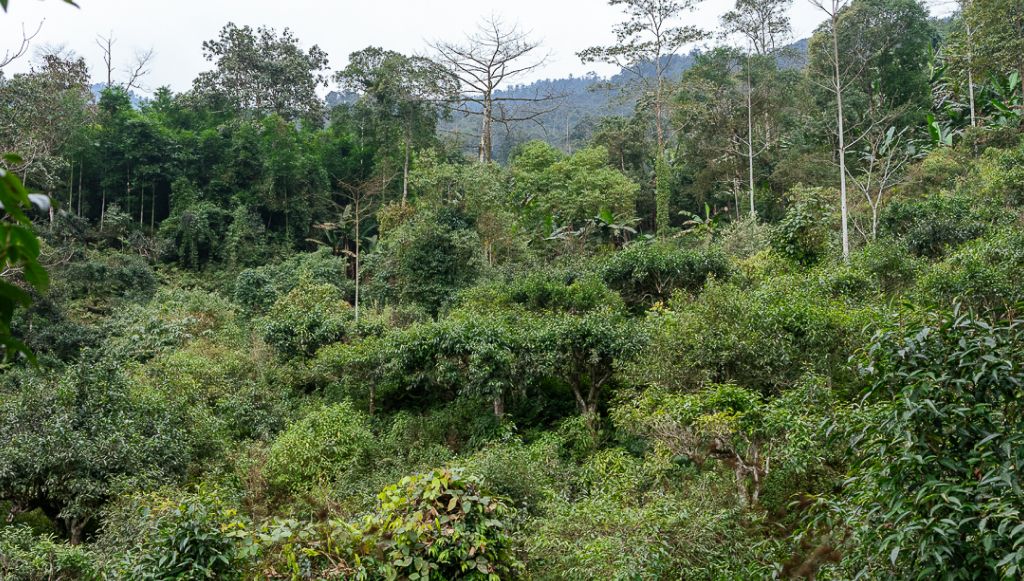
The common misconception is that tea is grown as a uniform row of waist high pruned bushes. It’s a familiar image and largely true for most products but this is not how tea was originally harvested and grown. With industrialisation and the commodification of tea this is the case however tea was originally grown in forest gardens within biodiverse ecosystems, thriving as part of a balanced, natural environment.
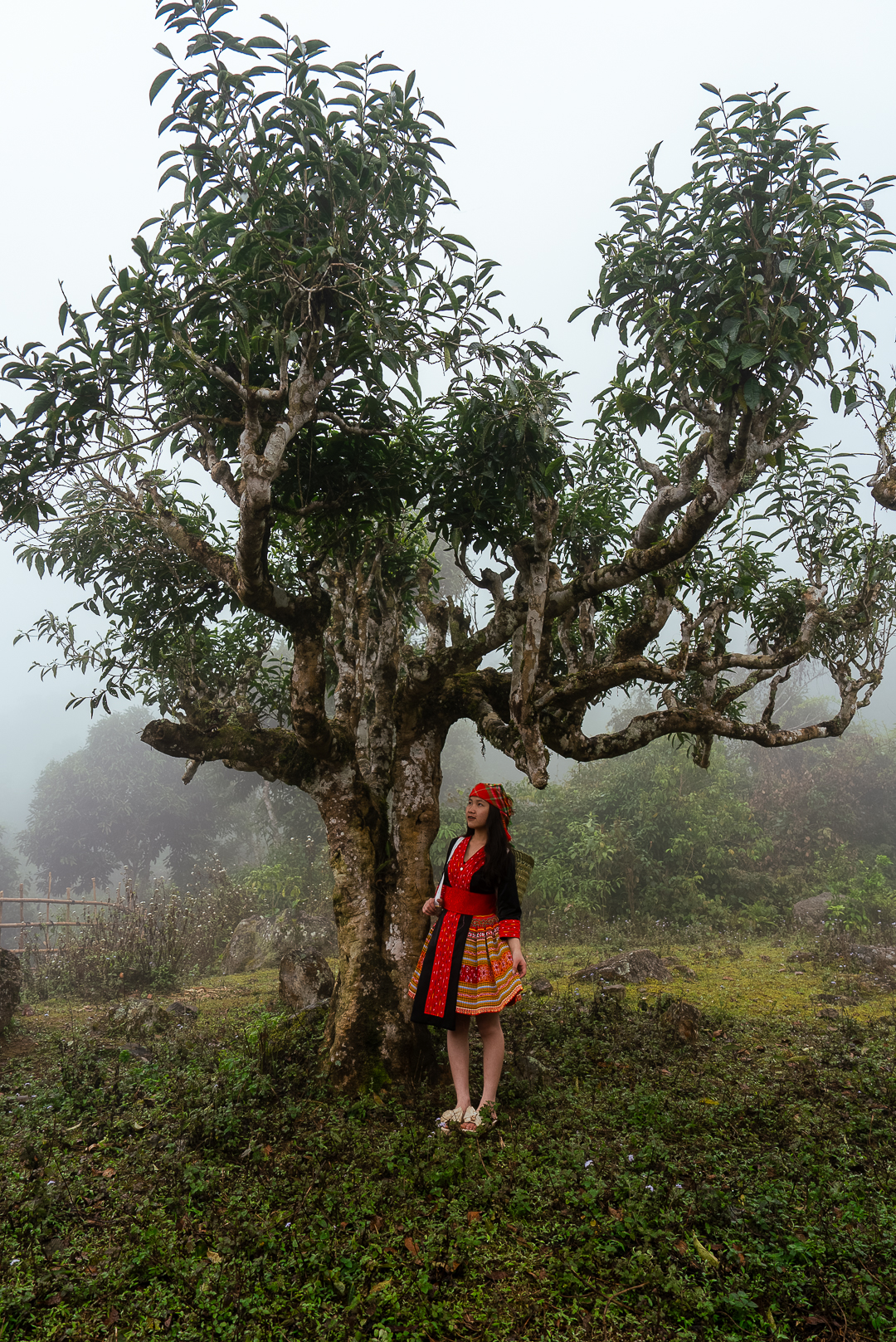
2. The Meaning of “Cha” (茶): A portrait of man in harmony with nature
The Chinese characters paints a picture of co-existing harmony between the earth, people and forests.
It combines three key elements (radicals):
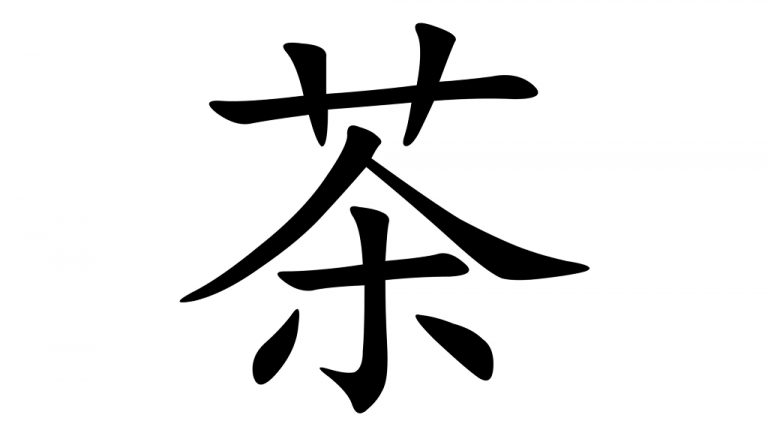
- 艹 – grass or plant (top)
- 人 – a person (middle)
- 木 – a tree or wood (bottom)
Together they form a portrait of humans living in harmony with plants and forests. This symbolism is a stark juxtaposition to plantation tea production and the wider modern model of agriculture focused on extraction and efficiency. Gushu cha embodies the original spirit of cha— a relationship of coexistence.
3. Gushu Cha vs Plantation Tea
| Gushu Tea (Ancient Tree Tea) | Plantation Tea |
|---|---|
| Grows in natural forests | Grown for yield and efficiency |
| Often intercropped with other vegetation | Same-aged, same-height plants |
| Grown without chemical fertilisers or pesticides | Often treated with fertilisers and pesticides |
| Exists within balanced, biodiverse ecosystems | Produced as monocultures |
| Grown from seed rather than cloned | Propagated through cloning for uniformity |
| Deep root systems penetrating far into the earth | Shallow root systems limited by cultivation |
| Absorbs deep-soil minerals unavailable to younger plants | Accesses only surface-level soil nutrients |
| Naturally resilient to drought and disease | More vulnerable, reliant on human intervention |
| Harvested selectively by hand | Often mechanically hedged and harvested |
4. Are Gushu Tree Tea Organic?
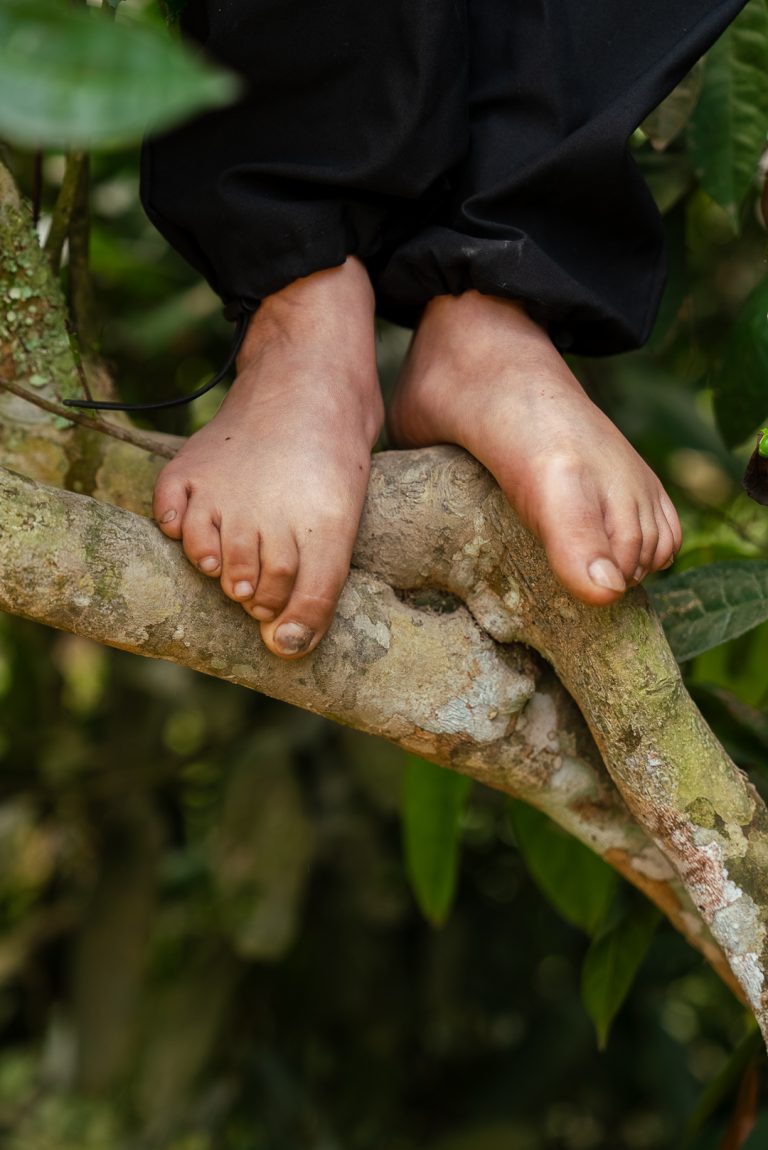
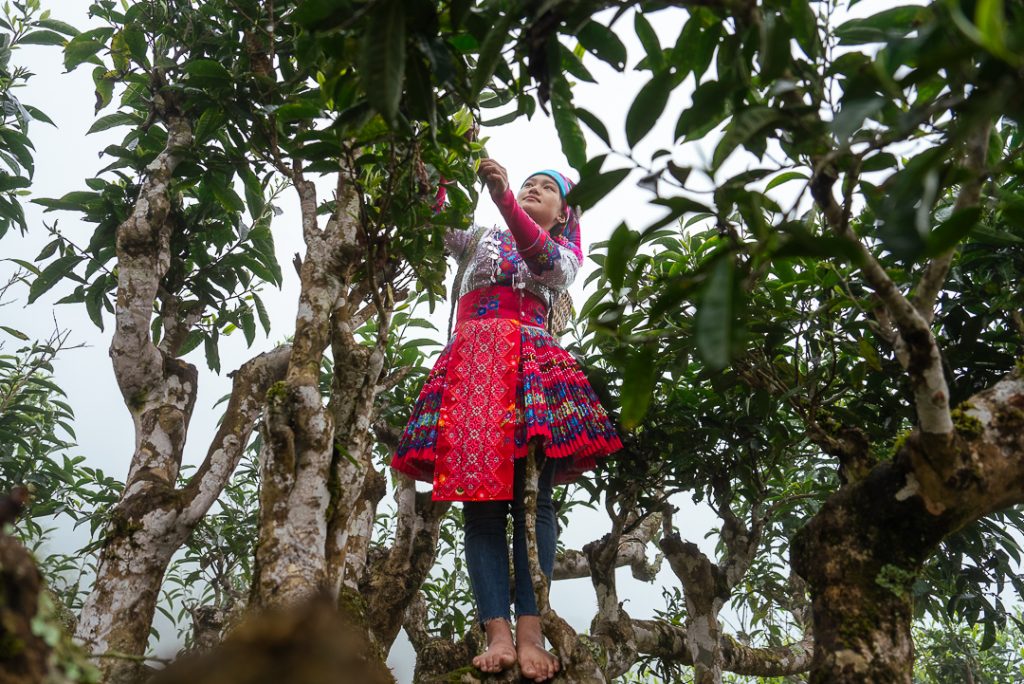
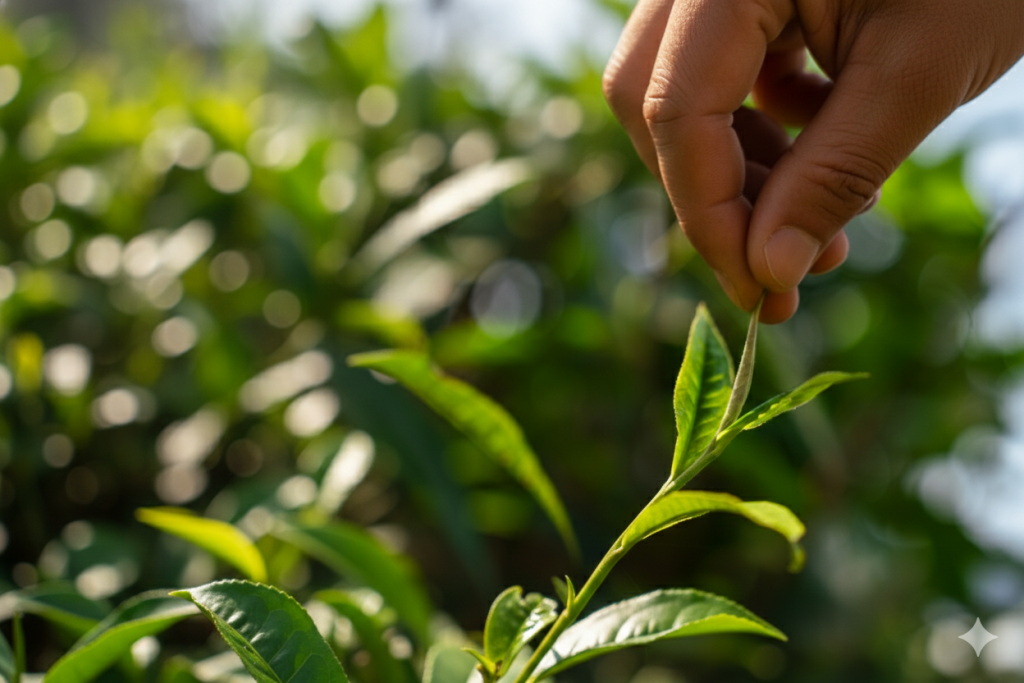
5. How are they picket: Hand-Picked in 3D
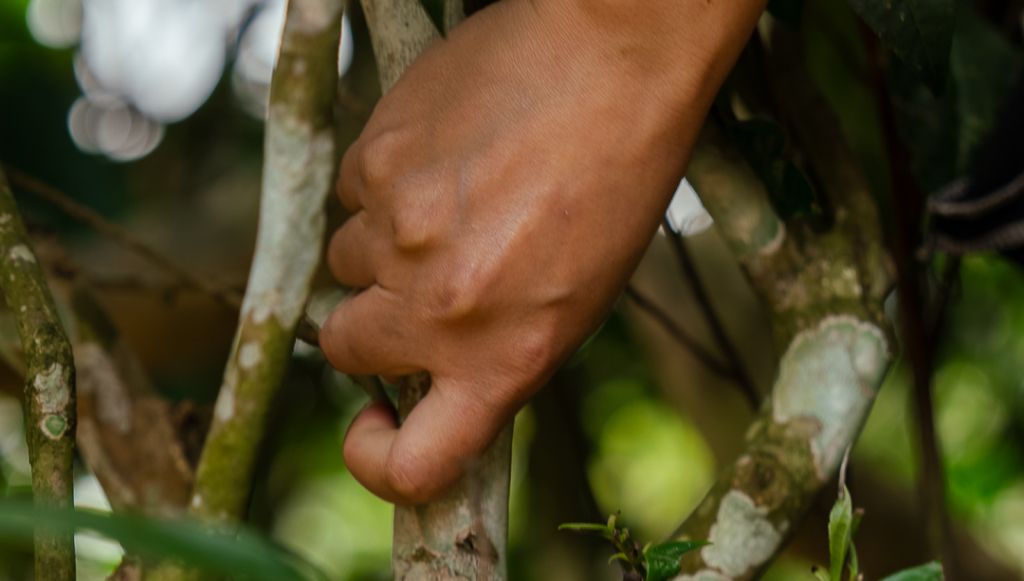
Climb trees balancing on branches
- Hold onto branches with one hand to maintain balance and pick with the other
- Leaves are harvested at different heights and proximities
- Rarely do pickers wear any safety equipment
- Navigate uneven forest terrain.
This is not factory-line agriculture. Every leaf is selected by hand, often by families who have cared for the same trees for generations.
6. Ethnic Communities: The Ancestoral Stewards of Tea
Tea remains central to their cultures, used in:
- Rituals and ceremonies
- Hospitality and daily life
- Traditional medicine
- Spiritual and ancestral practices
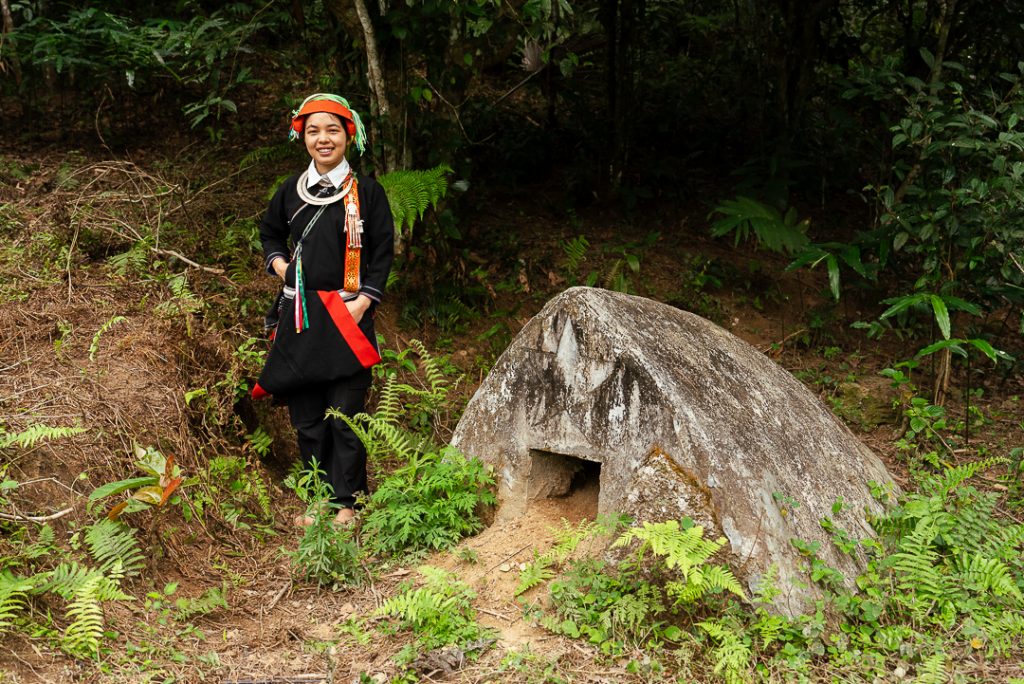
An example of an ethnic group and their connection with the tea trees.The Dao are born bathed in tea water, drink tea for sustenance, have tea in their rituals and ceremonies, follow teas harvest and rely on the tea tree for their livelihood and when they pass they are burnt with the fallen branches of the tea tree and their ashes are returned to the foot of tea trees)
7. Why Gushu Cha Is Rare
- Gushu is limited by nature itself
- Overharvesting damages the tree, so harvests are limited to a few times per year.
- Many trees are protected or sacred
8. Why does tree age matter?
- Slower Growth
Older tea trees (Gushu) are valued because age changes how a tree grows, feeds, and expresses itself in the cup. As trees mature, growth slows, allowing leaves to accumulate more minerals, resulting in greater depth, richness, and complexity than faster-growing young trees.
- Deeper Roots
Old trees have deeper and broader root systems. These roots reach mineral layers unavailable to younger plants, drawing a wider range of nutrients into the leaves, further enhancing flavour complexity.
- Growth in semi-wild and wild
They are usually only lightly managed forests in high altitude, biodiverseareas
9. What Does Gushu Cha Taste Like?
- Deep complexity
- Strong sweetness (hui gan) that returns even after ingesting
- Low bitterness, even when brewed strong
- Long-lasting lingering finish
- Evolving taste across multiple infusions
Many people notice that gushu tea doesn’t just taste different—it feels different it has cha qi
10. Cha Qi (茶气) of gushu Cha
One of the most profound qualities of gushu cha is its cha qi—the felt life vitality of tea.
Ancient tea trees grow slowly over decades or centuries. Their roots reach deep into mineral-rich soil, absorbing the full complexity of the land. This depth of growth translates into a tea that carries grounded, enduring energy. Personally when drinking gushu I have a flowy state of mind where I am very creative yet concentrated in what I’m doing whilst being very alert.
- Warming and centering in the body
- Clearing and focusing for the mind
- Expansive yet calming, rather than jittery
- Lingering long after the last cup
Why We Care about Gushu Cha at Bhava Cha
- Rooted in local communities
- Grounded in tradition
- Steeped in history
- Infused with life
At Bhava Cha we believe these qualities are what help us become found in flow.